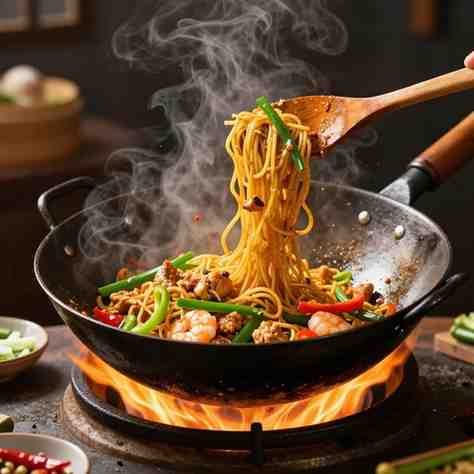
SINGAPORE STREET NOODLES: A CATERER’S GUIDE https://sinfullyspicy.com/easy-singapore-street-noodles/
You see this Singapore Street Noodle matter?
When people hear “Singapore noodles” for menu, dem think one thing
Dem think say e be authentic Singaporean dish
But I go tell you something
This dish no even originate for Singapore o
E be Hong Kong creation
Dem create am when Hong Kong be British colony
And curry powder dey readily available
But you know wetin?
The name don stick
And the dish don become popular all over the world
For Chinese takeaways for UK
For restaurants for America
Even for parties wey we cater for Oge’s Kitchen
People dey request am
Because e dey colorful
E dey flavorful
And e dey make people happy
When I first started making Singapore Street Noodles for events
I used to mess up the noodles
Dem dey clump together
Dem dey soggy
The sauce no dey coat am properly
But after many trials and many mistakes
I don perfect am
Now e be one of the popular dishes for our catering menu
And let me tell you something
When you put this colorful noodle dish on the table
People eyes go light up
Because e no be the regular thing wey dem dey see for every party
E be something different
Something special
WETIN BE SINGAPORE STREET NOODLES?
Before we go deep, make I break am down small
Singapore Street Noodles na stir-fried rice vermicelli dish
The signature na the yellow curry color
The curry powder dey give am that golden look
The dish dey contain rice vermicelli noodles
Thin noodles wey dey soak up the sauce well
The protein dey usually combination of shrimp, chicken, and char siu pork
Some versions get all three
Some get just one or two
The vegetables dey vary
But common ones dey include onion, bell pepper, cabbage, carrot, and bean sprouts
The sauce na combination of soy sauce, curry powder, and other seasonings
Despite the name, the dish no be from Singapore
E be Cantonese creation
The curry powder na the key ingredient
E give the dish that distinctive flavor and color
The history interesting o
When Hong Kong be British colony, curry powder dey readily available
The Cantonese chefs incorporate am into their cooking
And Singapore Noodles na one of the results
Now e be popular all over the world
From Chinese takeaways in the UK
To restaurants in America
To catering events wey we do for Oge’s Kitchen
THE INGREDIENTS I USE
Now, let me tell you wetin you need
Because as a caterer, I need to know everything
First, the noodles
The noodles na rice vermicelli
Thin rice noodles wey dey also called rice sticks
About 12 ounces
The important thing na how you prepare am
You no suppose boil am like regular pasta o
You suppose soak am in hot water
For about 2 to 3 minutes
Until e lose e shape and begin to separate
Then drain am
And spread am on a clean tea towel to dry
This dey remove excess moisture
And ensure the noodles fry separately
No clumping
No sogginess
Now the proteins
The proteins dey vary
But the classic version dey have multiple proteins
Chicken, boneless, skinless chicken thighs or breast, cut into small pieces
Shrimp, raw shrimp, peeled and deveined, about 4 ounces
Char siu pork, Chinese roasted pork, about 4 ounces, cut into strips
Some versions get bacon too
But char siu na the traditional one
For my kitchen, I use chicken, shrimp, and char siu
The combination dey give the dish depth
Different textures
Different flavors
Now the vegetables
The vegetables dey add color and crunch
Onion, sliced thin
Bell pepper, red or green, sliced thin
Cabbage, Napa cabbage dey common, shredded
Carrots, julienned or grated
Bean sprouts, about 1 cup
Green onions, sliced
Garlic, minced
Ginger, fresh, grated or diced
Jalapeño or chili, diced (optional for heat)
Now the sauce and seasonings
This one na where the flavor come from
Curry powder, about 1 tablespoon
This na the signature ingredient
Madras curry powder dey common
Soy sauce, about 4 tablespoons
Low-sodium dey best
Fish sauce, about 2 tablespoons
Rice vinegar, about 2 tablespoons
Sugar, about 1 tablespoon
Sesame oil, a drizzle
Oyster sauce (optional)
Mirin (optional)
And for garnish
Scallions
Fresh basil (optional)
Cilantro (optional)
Fried shallots (optional)
PRICE BREAKDOWN
Now, let’s talk money
Because as a caterer, I dey always think about cost
For about 4 to 6 servings
Rice vermicelli noodles – about $3 to $4
Chicken – about $4 to $5
Shrimp – about $5 to $6
Char siu pork – about $4 to $5
Vegetables – about $5 to $6
Sauce ingredients – about $3 to $4
Total – about $24 to $30
That dey come to about $4 to $6 per serving
And about $5 to $7 per serving if you buy higher quality proteins
If you buy am from restaurant
Singapore noodles dey cost about $8 to $12 per serving
PF Chang’s version dey about $10 to $14
For catering, I fit buy ingredients in bulk
The cost per serving go drop
For small events, I fit charge about $5 to $7 per serving
For big events, I fit charge about $4 to $6 per serving
E still dey reasonable for the kind of dish wey e be
NUTRITION BREAKDOWN
Now, let’s talk about the nutrition
Because this one important for many people
The nutrition dey depend on the ingredients and portion size
For a university dining version (6 oz serving)
350 calories
9.4g fat
58.6g carbs
8.1g protein
715.9mg sodium
For PF Chang’s version (1 serving)
610 calories
7g fat
112g carbs
26g protein
For a homemade recipe version (1 serving)
460 calories
56g fat
22g carbs
16g protein
For another homemade version
560 calories
71g carbs
28g protein
16g fat
1080mg sodium
You see how the numbers dey different?
The variation dey come from the ingredients and portion sizes
The restaurant versions dey higher in calories and sodium
The homemade versions dey more controlled
The calories dey between 350 and 610 per serving
The homemade versions dey generally lower in calories
Because you fit control the oil and sauce
The fat dey between 7g and 56g
The oil dey responsible
Sesame oil and vegetable oil dey add fat
If you use less oil, the fat go be lower
The carbs dey between 22g and 112g
The noodles dey responsible
Rice vermicelli get carbs
The protein dey between 8g and 28g
The chicken, shrimp, and pork dey provide protein
If you add more protein, the protein go be higher
The sodium dey between 715mg and 1080mg per serving
The soy sauce and fish sauce dey high in sodium
If you need low sodium, use low-sodium soy sauce
IS IT HEALTHY?
This one na question wey many people ask
The answer dey depend on the version you choose
For the most part, yes
Singapore Street Noodles na balanced meal
You get protein from the meat and shrimp
You get carbs from the noodles
You get vitamins from the vegetables
But the sodium dey the concern
Soy sauce and fish sauce dey high in sodium
If you need low sodium, use low-sodium soy sauce
And reduce the fish sauce
The fat dey moderate
The oil dey add fat
If you use less oil, the fat go be lower
For my catering, I tell people say this dish fit be part of a healthy diet
If you eat am with vegetables and you control the portion, e go be good for you
Just watch the sodium and the oil
ALLERGEN INFO
This one na important for many people
Because food allergies dey common
And people need to know wetin dey inside
Singapore Street Noodles contain
Soy from soy sauce
Gluten from soy sauce unless you use gluten-free version
Shellfish from shrimp
Sesame from sesame oil
Eggs in some versions
But you fit make am allergy-friendly
Use gluten-free soy sauce
Use coconut aminos instead of soy sauce
Skip the shrimp or substitute with more chicken or pork
Use a different oil instead of sesame oil
The dish is naturally dairy-free (unless you add dairy)
And nut-free (unless you add peanuts)
HOW I MAKE AM
Now, let me show you the exact way I do am
This na the process wey I don perfect over many events
The noodles dey separate
The sauce dey coat everything
The color dey golden
The dish dey make people happy
First, you need to prepare the noodles
This step na critical o
Place the dried rice vermicelli in a large bowl
Cover with boiling water
Soak for about 2 to 3 minutes
Don’t over soak am
The noodles should be soft but still have some bite
Drain immediately
Spread the noodles on a clean tea towel to dry
Let am sit for about 10 minutes
This removes excess moisture
And ensures the noodles fry separately
Not clump together
While the noodles dey dry, make the sauce
In a small bowl, mix together
Curry powder, about 1 tablespoon
Soy sauce, about 4 tablespoons
Fish sauce, about 2 tablespoons
Rice vinegar, about 2 tablespoons
Sugar, about 1 tablespoon
Whisk am well
Taste am
Adjust to your preference
If e too salty, add more sugar
If e too sweet, add more soy sauce
If e too thick, add a splash of water
Now, prep the proteins
Cut the chicken into small pieces
About 3/4 inch cubes
Season with salt and pepper
Peel and devein the shrimp
Cut the char siu pork into strips
Have everything ready
Because stir-frying na quick cooking method
You no get time to chop while cooking
Chop the vegetables
Slice the onion thinly
Slice the bell pepper thinly
Shred the cabbage
Julienne the carrots
Mince the garlic
Grate or dice the ginger
Have everything ready in separate bowls
The key to stir-frying na preparation
Now, the cooking begins
Heat a large wok over high heat
Add oil
When the oil dey hot, add the chicken
Stir constantly for 2 minutes
Add the char siu pork
Continue to stir for 3 minutes
Until the meats lose their color
And begin to brown slightly
Remove from the wok and set aside
Add the shrimp to the wok
Stir constantly until they become white
And brown slightly
About 1 to 2 minutes
Don’t overcook am
Remove and add to the meat
Add more oil to the wok
Add the onion and bell pepper
Stir-fry for 3 to 4 minutes
Until they begin to soften
Add the garlic, ginger, and chili
Stir for about 15 seconds
Just until fragrant
Add the cabbage and carrots
Stir-fry for another 2 minutes
Add the curry powder and sugar
Stir together
Now add the noodles
And the sauce
Toss to coat
Use tongs if you have am
The tongs help distribute the sauce evenly
Allow the noodles to cook for about 5 minutes
Periodically toss the ingredients in the wok
Until the noodles are heated through
And coated with the sauce
Turn off the heat
Add the cooked proteins back to the wok
Toss to combine
Add the bean sprouts
And green onions
Toss to combine
Add a drizzle of sesame oil
And the remaining soy sauce, fish sauce, rice vinegar
And crushed red pepper flakes if you want heat
Garnish with fresh basil or cilantro
And fried shallots if you want
Serve immediately
KITCHEN SECRETS
Let me tell you some things I don learn from cooking this dish for years
Never boil the noodles
This one na the most important secret
Never boil rice vermicelli for stir-fry
Always soak am
Boiling go make am mushy
The noodles go become too soft
And go clump together
Soak am in boiling water for 2 to 3 minutes
Then drain immediately
And let am dry
Dry the noodles well
After soaking, dry the noodles well
Spread am on a clean tea towel
Let am sit for about 10 minutes
This removes excess moisture
And ensures the noodles fry separately
No clumping
No sogginess
Use high heat
Stir-frying requires high heat
The wok must be smoking hot
If the heat no dey high enough
The noodles go steam instead of fry
And go become soggy
Keep the wok hot
And never lose your sizzle
Prep everything first
This one na important o
Stir-frying na quick cooking method
You no get time to chop while cooking
Chop your vegetables
Whisk the sauce
Soak the noodles
Have everything ready before you start
Use a wok
A wok dey best for this dish
The shape dey allow for tossing
And even cooking
If you no get wok, use a large skillet
But wok dey preferred
Don’t overcrowd
If you put too much food in the wok
The temperature go drop
And the food go steam instead of fry
Cook in batches if you need to
The key na high heat and quick cooking
Toss, don’t stir
When you add the noodles, toss am
Use tongs to lift and toss
This dey distribute the sauce evenly
And prevent the noodles from clumping
PROBLEMS I’VE SEEN
I don cook this dish so many times I don see every problem wey fit happen
Noodles too soggy?
You soaked the noodles too long
Or you didn’t dry am well
Next time, soak for 2 to 3 minutes only
And dry am on a tea towel
Noodles clumping together?
You didn’t dry the noodles well
Or you didn’t use enough oil
Dry the noodles well
And use enough oil to prevent sticking
Noodles too dry?
You didn’t add enough sauce
Or you cooked am too long
Add more sauce
And cook for less time
Not enough flavor?
You didn’t use enough curry powder
Or you forgot the garlic and ginger
The curry powder dey the signature flavor
Use enough
And don’t forget the aromatics
Too salty?
You used regular soy sauce
Or too much fish sauce
Use low-sodium soy sauce
And reduce the fish sauce
Too spicy?
You used too much chili or curry powder
Start with less
And adjust to your taste
Vegetables too soft?
You overcooked the vegetables
Cook them quickly on high heat
They should be tender but still crisp
Proteins overcooked?
You cooked the proteins too long
Cook them just until done
Then remove from the wok
Add back at the end
SERVING IDEAS
Serve the noodles as a main course
E dey filling
E dey satisfying
Perfect for dinner
Serve the noodles as a side dish
With other Asian dishes
E dey complement the meal well
For parties, set up a noodle bar
Let guests choose their proteins
And vegetables
And sauce
This dey interactive and fun
Serve with spring rolls
Or dumplings
Or egg rolls
The sides dey complement the noodles
COMMON QUESTIONS
Can I use a different noodle?
Yes
You can use thin egg noodles
Or udon noodles
But rice vermicelli na the traditional one
Can I make this vegetarian?
Yes
Skip the meat and shrimp
Add more vegetables or tofu
Use vegetable broth instead of fish sauce
Can I use a different protein?
Yes
You can use beef
Or pork
Or tofu
Any protein will work
How do I prevent clumping?
Soak the noodles for 2 to 3 minutes only
Dry am well on a tea towel
Use enough oil
And toss am well when cooking
Can I make this ahead?
Yes and no
E dey best fresh
But you can store am for up to 3 days
The noodles go absorb the sauce and become soft
Reheat in a skillet with a splash of water
Can I freeze Singapore noodles?
E no dey advisable
The texture go change
The noodles go become mushy
Is this gluten-free?
E depends on the soy sauce
Use gluten-free soy sauce
Then e go be gluten-free
Is this dairy-free?
Yes
The traditional version dey dairy-free
Just don’t add any dairy
How much sodium is in this?
E dey depend on the recipe
From 715mg to 1080mg per serving
Use low-sodium soy sauce to reduce sodium
LAST WORDS
So that’s how I do am
Singapore Street Noodles na dish wey dey satisfy
E dey colorful
E dey flavorful
E dey make people happy
The noodles dey bouncy
The sauce dey curry-spiced
The vegetables dey crisp
The proteins dey tender
The cost dey reasonable
For about $4 to $6 per serving for homemade
Or about $8 to $12 per serving from restaurant
You fit feed your family well
The nutrition dey balanced
Good protein from the meat and shrimp
Carbs from the noodles
Vitamins from the vegetables
The sodium dey the only concern
But you fit control am when you cook am yourself
For me, this dish don become one of the popular items for Oge’s Kitchen
People request am for parties
People request am for events
People request am for family dinners
Because e be something different
Something special
Something wey make people say “Ah, wetin be this one?” before dem chop am and dem begin dey ask for more
If you try this recipe, share your results for me for the comment section
If you get questions, ask am now
I go answer you as we dey prep for the weekend events
And if you no get time to cook this one, remember say Oge’s Kitchen dey available for catering for your birthdays, weddings, and events
We bring the restaurant to your house
