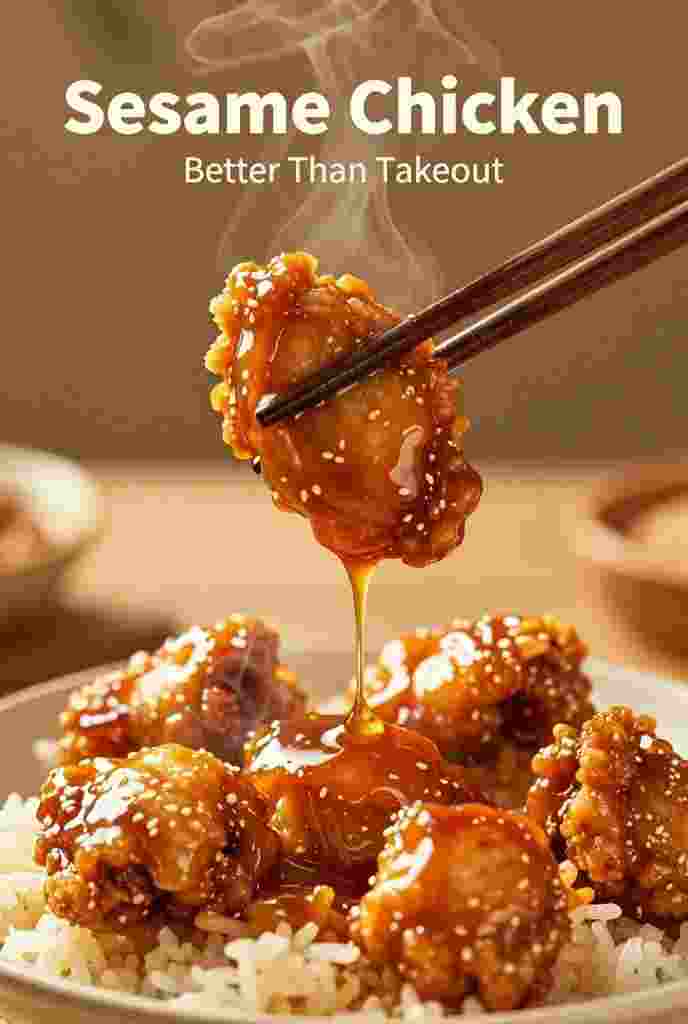
Sesame Chicken Entree Price, Calories, Nutrition Breakdownhttps://fitia.app/calories-nutritional-information/sesame-chicken-entree-20019118/
I’m gonna be straight with you
Sesame chicken is one of those dishes that people love but feel guilty about
And I get it
That sweet, sticky, crispy chicken just hits different
But here’s the thing
You don’t have to feel bad about eating it
And you definitely don’t have to pay takeout prices every time you want it
Let me break it all down for you
The prices
The calories
The nutrition
And most importantly, how to make it better than what you’d get from any restaurant
Why Sesame Chicken Is So Popular
I’ve been cooking for over fifteen years
And I’ve noticed something
People love sweet and savory combos
There’s something about that honey and soy sauce mixture that just works
Sesame chicken has this perfect balance
The crispy chicken gives you texture
The sauce gives you that sweet tangy flavor
The sesame seeds add that nutty crunch
It’s comfort food, plain and simple
And honestly?
That’s why people keep ordering it
The Price Breakdown
Let me tell you what you’re actually paying for
Restaurant Prices
If you’re ordering sesame chicken at a restaurant, you’re looking at about $10-$17 per entree
That’s for one serving
One
I’ve seen places charge $10.20 for a plate
And for catering trays?
A tray that serves 5 people can run you $70
That’s $14 per person
And you’re not even getting the full portion sometimes
What you’re really paying for
Restaurant prices cover way more than just the food
You’re paying for the rent
The staff
The utilities
The profit margin
And honestly? That’s fine
But if you make it at home, you can get way more food for way less money
Frozen Entree Prices
Frozen sesame chicken meals are cheaper
A 9.5 oz frozen entree with fried rice is about $4.69
An 18 oz frozen multi-serve entree runs about $8.69
That’s about $0.48 per ounce
But here’s the catch
Those frozen meals usually have way more sauce and filler than actual chicken
And the sodium? Don’t even get me started
Catering Prices
If you’re feeding a crowd, catering is the way to go
A 5 lb catering tray of sesame chicken costs about $95
That feeds maybe 10-12 people
So about $8-$10 per person
Not bad
But again, you’re paying for convenience
Homemade Cost
This is where it gets good
When I make sesame chicken at home, here’s what I spend
Chicken thighs (1.5 lbs) = about $5
Cornstarch and flour = maybe $1
Sauce ingredients = $2-$3
Sesame seeds = $0.50
Rice = $0.50
Total cost? Around $9
That feeds 4 people
So about $2.25 per person
See the difference?
Calories and Nutrition Breakdown
Let me be real with you about what’s in this dish
Because the numbers can vary wildly depending on where you get it
Restaurant Versions
A standard restaurant serving of sesame chicken can range from 340 to over 500 calories
Here’s a typical breakdown for a restaurant portion:
| Nutrient | Amount |
| Calories | ~370 |
| Total Fat | 9.8g |
| Saturated Fat | 1.6g |
| Cholesterol | 21.8mg |
| Sodium | 707mg |
| Total Carbs | 53.3g |
| Sugars | 16.3g |
| Protein | 33g |
Those numbers aren’t terrible
But here’s the thing
That’s just for the chicken
That doesn’t include the rice
Or the vegetables
Add those in and you’re looking at 600-700 calories total
Frozen Versions
Frozen meals are a different story
A 9.5 oz frozen sesame chicken entree with rice has about :
| Nutrient | Amount |
| Calories | ~450 |
| Total Fat | 11g |
| Sodium | 1,160mg |
| Sugar | 22g |
| Protein | ~15g |
Look at that sodium
1,160 milligrams
That’s almost half your daily recommended limit
And the sugar? 22 grams
That’s a lot for a single meal
Another frozen version, the Lean Cuisine sesame chicken, has 880mg of sodium and 15g of sugar
It’s better
But still high
Homemade Version
This is where you can actually control what goes into your food
When I make sesame chicken at home, this is what it looks like per serving:
| Nutrient | Amount |
| Calories | ~320 |
| Total Fat | 12g |
| Saturated Fat | 2.5g |
| Cholesterol | 31mg |
| Sodium | 450mg |
| Total Carbs | 28g |
| Sugars | 14g |
| Protein | 22g |
Notice the difference?
The sodium is way lower
The sugar is more reasonable
And you actually get more protein for fewer calories
Why the difference
Because I control the sauce
I use less sugar
I use low-sodium soy sauce
I don’t add unnecessary salt
And I use real chicken thighs instead of processed chicken nuggets
What’s Actually In Sesame Chicken Sauce
Most people don’t know what goes into that sauce
Let me break it down
The Sweet
Honey is the main sweetener
Some places use corn syrup
Some use sugar
But honey gives that distinctive flavor
How much?
About 1/4 cup for a batch that serves 4
That’s about 16 grams of sugar per serving
Which isn’t terrible
But restaurant versions can have twice that
The Savory
Soy sauce is the backbone
It gives the sauce that umami flavor
Without it, the sauce would be one-dimensional
Just sweet with no depth
Low-sodium is the way to go
I use reduced-sodium soy sauce
Cuts the salt by almost half
And you can’t tell the difference
The Tang
Rice vinegar adds that slight tang
White vinegar works too
But rice vinegar is milder
Less sharp on your tongue
The ratio
About 1/4 cup vinegar to 1/4 cup honey
That equal balance is what makes it work
The Nuttiness
Sesame oil
This is crucial
A little bit goes a long way
It adds that distinctive nutty flavor
But don’t use too much
A tablespoon is plenty
Too much and it overpowers everything
The Thickener
Cornstarch
This is what gives the sauce that glossy, sticky consistency
Mix it with cold water before adding
Never add dry cornstarch directly to hot liquid
It’ll clump
Trust me
How I Make Sesame Chicken
Let me walk you through my process
Step 1: The Chicken
I use boneless, skinless chicken thighs
They stay juicier than breasts
Cut them into 1-inch pieces
The marinade
This is the secret
Mix egg white, soy sauce, honey, and white pepper
Toss the chicken in it
Let it sit for at least 10 minutes
Up to 8 hours if you have time
The marinade adds flavor and helps the coating stick
Step 2: The Coating
The coating is what makes it crispy
Here’s my mix
Cornstarch
All-purpose flour
Baking powder
Chicken bouillon powder
Why baking powder?
It creates tiny bubbles
Those bubbles make the coating extra crispy
It’s a restaurant secret
Step 3: The Fry
Heat oil to 350°F
That’s the magic number
Too low and the chicken absorbs oil
Too high and it burns on the outside before cooking through
Fry in batches
Don’t crowd the pan
The temperature will drop
You’ll get soggy chicken instead of crispy
Fry for about 3 minutes per batch
Until golden brown
Step 4: The Sauce
While the chicken is frying, make the sauce
Whisk together
Honey
Soy sauce
Vinegar
Water
Cornstarch
Sesame oil
Cook it down
Heat a little oil in a pan
Add garlic and ginger
Cook for 30 seconds until fragrant
Pour in the sauce mixture
Stir constantly
Watch it thicken
It should get glossy and coat the back of a spoon
Step 5: Bring It Together
Add the crispy chicken to the sauce
Toss to coat
Sprinkle with sesame seeds
Serve immediately over rice
Healthier Swaps That Actually Work
Because sometimes you want the flavor without the calories
Baked Version
Instead of frying, bake the chicken at 425°F for 20 minutes
Spray with oil for crispiness
You won’t get the exact same texture
But it’s still good
Air Fryer Version
Air fry at 400°F for 12-15 minutes
Shake the basket halfway through
This gives you the crispiness with way less oil
Less Sugar
Cut the honey back
Let the natural sweetness of the other ingredients come through
You can also use a sugar substitute
More Vegetables
Add broccoli, snap peas, or bell peppers
More nutrients
More volume
More crunch
Common Problems And Fixes
I’ve made every mistake in the book
The chicken isn’t crispy
Oil wasn’t hot enough
Or you crowded the pan
Or you didn’t double coat
You didn’t marinate the chicken first
The coating fell off
Or you didn’t let it rest after coating
Give it 5-10 minutes before frying
The sauce is too thick
Add a little water or broth
Stir it in slowly
The sauce is too thin
Cook it longer
The cornstarch needs time to activate
Too salty
Use low-sodium soy sauce
And don’t add extra salt
One Last Thing
Sesame chicken is one of those dishes that proves you don’t have to choose between flavor and health
Sure, the restaurant version can be heavy
But with a few smart swaps, you can make it work
And honestly?
Making it at home tastes better anyway
